Pest control · Abuja & Lagos
Pest control, done to a written standard.
Licensed by EHCON and PECAN, with an Operational Permit from the Abuja Municipal Area Council. We inspect before we quote, we tell you what we are applying, and we put the re-entry instructions in writing.
What we treat
Different pests, different work.
A termite problem and a cockroach problem look nothing alike in method, cost or disruption. That is why the inspection comes first.
Termites
Structural and subterranean. Usually the most expensive problem to ignore.
Cockroaches
Kitchens, drainage voids and service ducts, where they breed out of sight.
Rodents
Rats and mice — treated alongside the entry points that let them in.
Bedbugs
Mattresses, frames and skirting. Nearly always needs a follow-up.
Mosquitoes
Fogging and larval source reduction, not just adult knock-down.
Ants & flies
Common in food premises and after the rains.
How a job runs
From your call to the follow-up inspection.
Six steps. You are not committed to anything until the second one is in your hands.
- 01
Inspection, before any quote
We come and look. Which pest, how far it has spread, what is drawing it in, and what in the building is working against you. A quote given over the phone for a pest you have described but we have not seen is a guess.
- 02
A written treatment plan
The pest, the method, the products, the areas to be treated, whether one visit or a programme, and the cost. In writing, before you commit to anything.
- 03
Your preparation list
Issued in writing ahead of the visit and tailored to your premises: what to put away, what to cover, who must leave and for how long. See the list below for what it typically contains.
- 04
Treatment
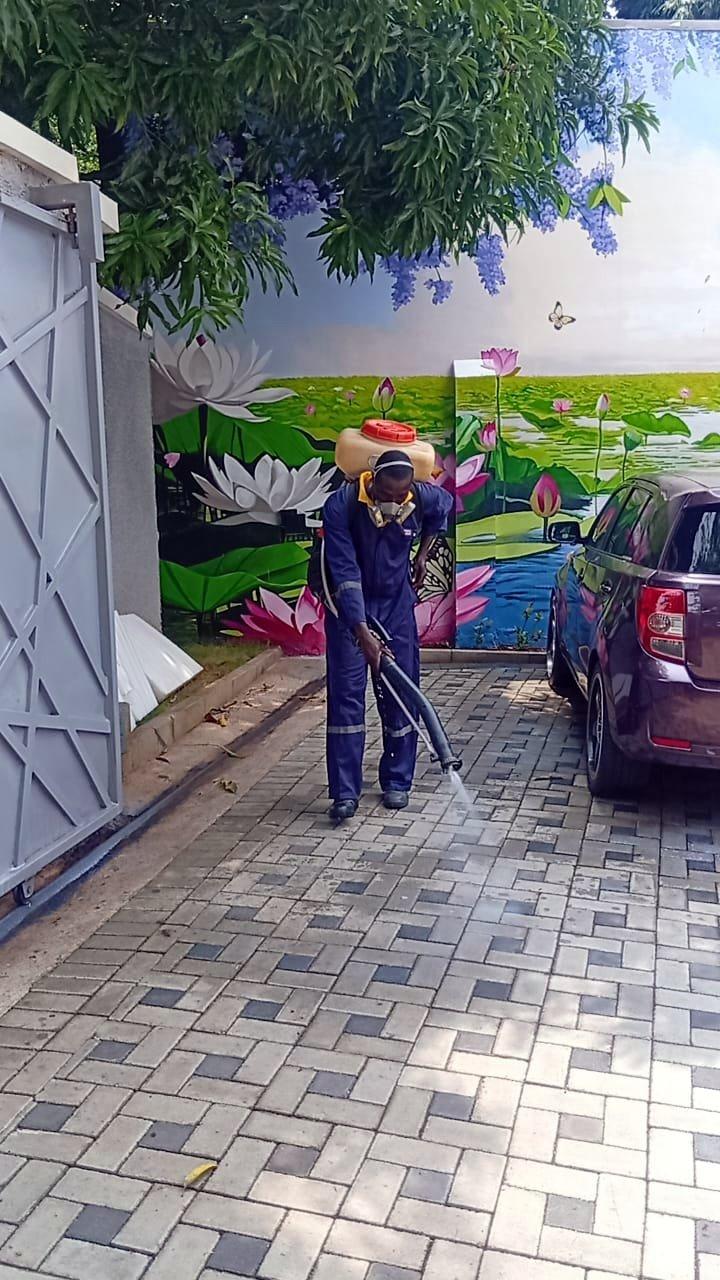
Carried out by our technicians in full PPE, applied strictly to the product label at measured dilution. We record what was applied, where, and at what rate.
- 05
Re-entry, in writing
You are told before we start exactly when it is safe to return and what to do first — ventilate, wipe down food-contact surfaces, replace coverings. Never a vague 'a few hours'.
- 06
Follow-up inspection
We come back to confirm the treatment worked, and we tell you honestly if the cause is structural and no amount of re-treatment will fix it.
Your part
Preparing the premises, and coming back to them.
A treatment is only as good as the preparation around it. You receive this as a written list, tailored to your premises, before the day — but here is what it normally covers.
Before we arrive
- Put away all food, utensils, crockery and anything that touches food. Cover what cannot be moved.
- Remove or cover pet bowls and bedding. Cover fish tanks completely and switch off the air pump.
- Clear access to skirting boards, cupboard interiors, under sinks and behind appliances — these are where the work happens.
- Arrange for everyone, including pets, to be out of the premises for the period we have given you in writing.
- Close windows and doors as instructed; some treatments need the space sealed, others need it ventilated.
- Tell us in advance about anyone pregnant, elderly, asthmatic or otherwise vulnerable, and about any aquarium, beehive or livestock on the property.
When you return
- Do not return before the time stated on your treatment plan, even if the smell has gone — odour is not a safety indicator.
- Ventilate thoroughly on return: open windows and doors before anyone settles back in.
- Wipe down all food-preparation surfaces, sinks and anything that touches food before using them.
- Leave treated skirting, cracks and void areas alone — washing them removes the residual barrier you paid for.
- Keep pets off treated surfaces until they are fully dry.
- Expect to see dead and dying insects for several days. That is the treatment working, not failing.
The re-entry time is specific to your job. It depends on the product, the method and how the space ventilates, so we will not quote a figure here. You get it in writing on your treatment plan before we start. If it does not suit your household or your operation, tell us at the inspection — there is often another product or method that does.
Pest control safety protocol
The products that kill pests are not harmless to people.
Our everyday cleaning products are biodegradable and safe around children and pets. Pest control is different. Plenty of companies advertise treatments as “safe for children and pets” — we will not, because it is not true of any product effective enough to clear an infestation. What makes pest control safe is the procedure around the chemical, so here is ours, in full.
1. Site assessment before anything is mixed
We inspect the property first and identify the pest, the extent of the infestation, and the conditions feeding it. We note who uses the space — children, elderly residents, pregnant women, pets, patients, food handlers — along with aquariums, air intakes, open food stores and anything else that changes how we treat. The treatment plan follows the assessment; we do not arrive with a fixed answer.
2. Products applied strictly to their label
Every product we use carries a legally binding label: approved uses, dilution rate, application method, maximum dose and the hazards involved. We follow it exactly. Dilution is measured, never estimated — under-dosing breeds resistance and over-dosing endangers people without killing more pests. Concentrates stay in their original labelled containers, transported and stored separately from any cleaning equipment.
3. Full PPE for the technician
Our technicians wear coveralls, chemical-resistant gloves, eye protection and respiratory protection appropriate to the product and the space being treated. PPE is checked before each job and replaced when damaged. This is also the clearest signal to a client of what they are dealing with: if the person applying it needs a respirator, the room is not safe to occupy during treatment.
4. Vacating and re-entry instructions, in writing
Before we start, we tell you who must leave, what to cover or remove — food, utensils, toothbrushes, pet bowls and bedding, fish tanks and their pumps — and exactly when it is safe to return. The re-entry interval is set by the product label and the ventilation available, and we state it as a time, not a vague 'later'. We ventilate the space and confirm it is clear before handing the property back.
5. Licensing, records and follow-up
We are licensed by EHCON (Environmental Health Council of Nigeria) and PECAN (Pest Control Association of Nigeria), and hold an Operational Permit from the Abuja Municipal Area Council, which allows us to issue AMAC certification for pest services within the municipality. We record what was applied, where and at what rate, and we return for a follow-up inspection to confirm the treatment worked.
If any of this is unclear before a treatment, ask us — the instructions are part of the job, not an afterthought. They also form part of our terms of service.
Pest control questions
The things people ring up to ask.
Pest control enquiries
Start with an inspection, not a price.
Tell us what you are seeing and where. We will come and look, then put the pest, the method, the products and the cost in writing before you commit to anything.
Or reach us directly — 0809 970 0001, WhatsApp, or infodesk@dustandwipes.com.
- Inspection first — we do not quote a pest we have not seen.
- Licensed by EHCON and PECAN, with an AMAC Operational Permit for certification in the municipality.
- Written treatment plan, written preparation list, written re-entry instructions.